
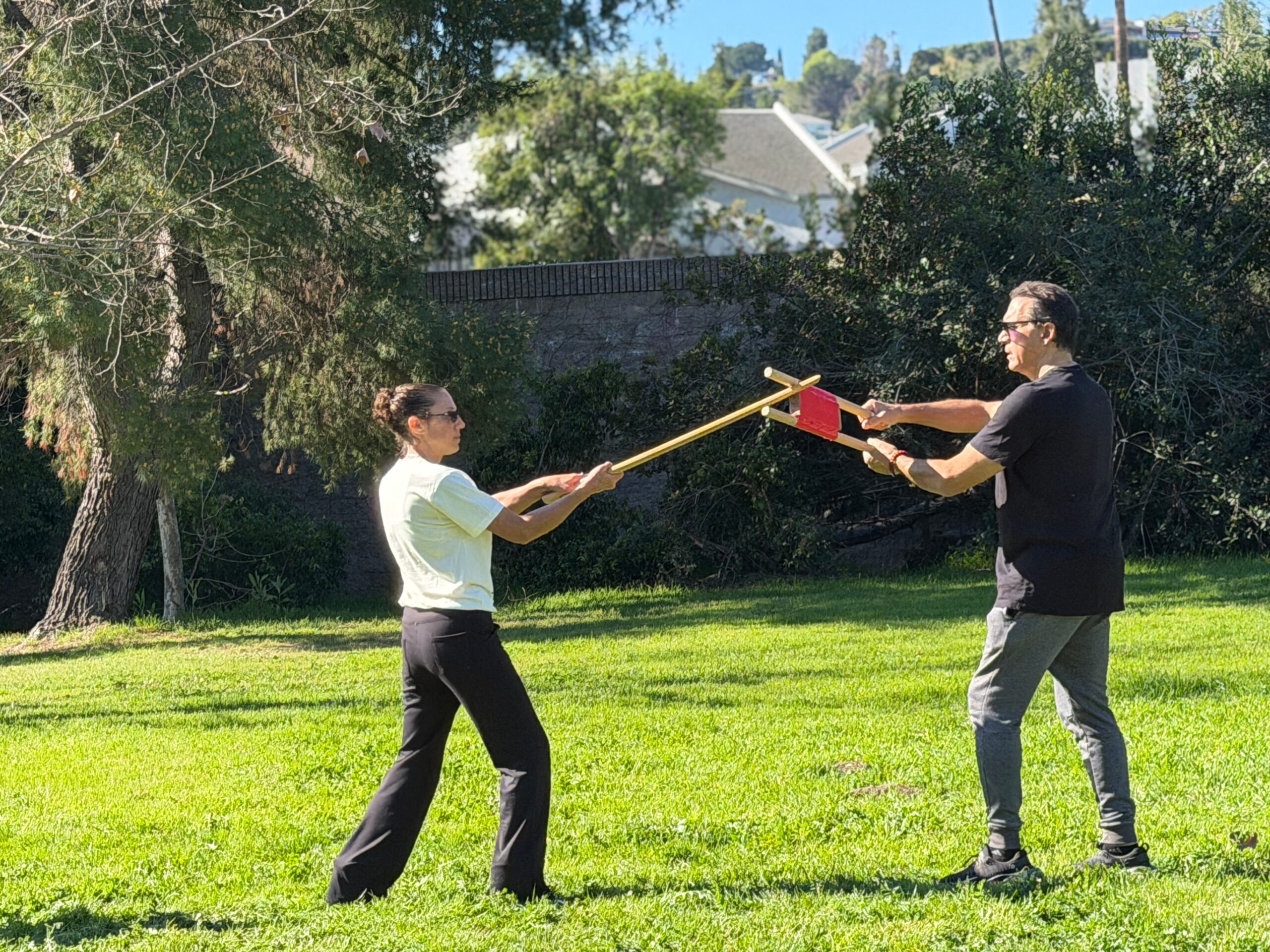
Nervous First-Timers: What Your First Session Actually Feels Like
19Aug 26
So You Want to Come: Overcoming First-Day Nerves
You’ve watched the videos, pictured yourself with a sword in hand, and something in you said yes.
And then your brain starts screaming: I’m going to look stupid. Everyone will be advanced. I’m too old, too out of shape, too new.
Congrats. That fear isn’t a red flag — it’s usually a sign you actually care. People who don’t care how they look tend to be the ones swinging like they’re fighting ghosts.
This blog is for the moment before the moment — when you’re deciding whether to show up. Our 2026 standard is A Cut Above the Rest. The skill we build all year is Control the Moment. And here’s the secret: Control the Moment starts before you ever pick up a sword. It starts when you don’t let fear drive.
First, the truth: everyone starts here
Every single person who has ever attended an SXP event was, at some point, a nervous first-timer. The instructor at the front. The person next to you who looks like a natural. All of them.
Your brain will tell you a lie: “Everyone else will be advanced and I’ll be the only beginner.”
Reality: There are always beginners. Always returners. Always people who are athletic but new, and people who are not athletic but brave. And half the room is quietly thinking the exact same thing you are.
We build every event from the ground up, for the person who has never held a sword along with those who have had years of experience. That’s not a disclaimer. It’s the whole design.
Why it feels awkward at first (and why that’s fine)
Sword training is weird at first because it’s not like most workouts. You’re doing unfamiliar positions, coordination you’ve never practiced, and timing and distance with another person — all while holding something that makes you feel very “watched.”
Your body is learning a new language. Of course it’s awkward. But the key is to allow the strangeness to become part of the experience. Trying to look “cool” while learning is like trying to speak fluent Spanish on day one because you bought a passport. Doesn’t work like that.
What your first session actually feels like
Let’s walk through it so your anxiety can stop writing fanfiction.
-
You arrive, and you’re not alone. Most people come in a little unsure. You’ll see it on other faces and relax a bit.
-
It starts with breath, not blades. Every SXP event opens with a warm-up and breath work. Before anyone hands you anything, you’re already settling your nervous system. That’s on purpose.
-
You learn the basics first. Stance. Posture. How to hold the trainer sword. How to move your feet. Small, doable pieces — not a fight scene on day one.
-
You go slow, and slow is the point. Nobody’s swinging fast. Control lives at slow speed, so you’ll have time to actually feel what you’re doing.
-
You’ll mess up, and so will everyone. That’s not failure. That’s the reps. The instructors expect it and coach you through it.
-
You’ll surprise yourself. Somewhere in the middle, you stop thinking about being watched and start thinking about the movement. That’s the moment people fall in love with this.
Nobody is grading your coolness. We’re training
The fears, answered plainly
-
“I don’t know what to do.” That’s why instructors exist. You’re not expected to arrive as a finished product.
-
“I’m not fit enough.” You don’t get fit before you train — training is how you get fit. SXP is built so you scale up at your own pace.
-
“I’m too old.” Skill is not age-gated. Ego is the only thing that struggles. We’ve had people in their 50s, 60s, and 70s move better leaving than they did walking in.
-
“I’m uncoordinated.” Coordination is trained, not gifted. The people you think are “naturals” are usually just consistent.
-
“I’ll mess up and everyone will see.” Everyone messes up. That’s literally what practice is for.
-
“It’s dangerous.” You train with practice swords — bokken and trainers — at controlled distance, with safety taught first. Control is the whole curriculum.
A simple “first day” mindset (steal this)
Here’s the thought that makes beginners improve fast: “My job today is not to be good. My job today is to be teachable.”
That one thought will save you months of self-conscious suffering. Because once you stop trying to perform, you can actually learn.
Why nerves are the perfect place to start
That jittery feeling — fast heartbeat, shallow breath, busy head — is your nervous system bracing. Learning to steady it on purpose is the single most useful skill we teach. Not just for sword training. For everything.
So when you walk in nervous, you’re not unprepared. You’re holding the exact raw material we’re going to help you train. Breathe. Focus. Move slow. Control the moment. You started practicing it the second you decided to come.
A word from Adrian
“Everybody, whether you’re a beginner or already have experience, should come into any new class with an open mind. The ability to adapt is part of what makes you successful — not only in sword work, but in anything you do in life.Allow yourself to be open to failure, open to changing the way you do something, and open to trying techniques that may feel strange or uncomfortable at first. If you already have experience, something new may eventually become another valuable tool you can add to your repertoire. Other than that, enjoy the moment, have fun, and embrace the experience.”
Your pre-event reset (do this in the car if you need to)
-
Exhale longer than you inhale: Inhale through the nose for a count of 4, exhale slowly for 6. Repeat 8–10 times. A long exhale tells your body: we’re okay.
-
Feet on the ground: Stand tall. Feel your weight even in both feet. Roll your shoulders down.
-
Pick one goal (not ten): Try: I’ll focus on footwork. I’ll ask at least one question. I’ll stay safe and move clean. Pick one goal you can’t fail.
-
Decide to be a beginner on purpose: Say it out loud: “I’m allowed to be new.” Because you are.
What to bring (so that’s one less worry)
-
Comfortable clothes you can move in
-
Water
-
Closed-toe shoes
-
An open mind — that’s the real requirement
(Everything else, including the sword, is provided.)
This is a community, not a class
Events aren’t just training. They’re where strangers become training partners, then become friends, then become your people. (Yes, it’s wholesome. No, we’re not apologizing.)
Everyone respects the beginner who shows up — not the one pretending they’re advanced. The one who shows up, tries, learns, and keeps going. That person is the future of the community.
Come train with us
Reading about it helps. Doing it in the room — with coaching, and with people who were nervous once too — is where the nerves turn into something you’re proud of. Never picked up a sword before? That’s exactly who we built this for. We start everyone from the beginning.
If you’re waiting to feel ready, you’ll be waiting forever. Nervous isn’t a reason to stay home — it’s the starting line.
Read this slowly: you don’t become confident before you start. You become confident because you start. That’s Control the Moment. And it’s the first Cut Above.
#ControlTheMoment
#SwordExperience
#ACutAboveTheRest
No approved comments yet.
Leave a Reply